Trading, from deal capture to settlement, in one modular system
opsPhlo Trading gives commodity traders a single place to capture physical and paper deals, price them, hedge exposure and track every contract through to delivery and settlement. Built from the ground up for trade, powered by Acumatica.
One source of truth for every trade you run
Most trading desks still stitch deals together across spreadsheets, broker statements and disconnected back-office systems. opsPhlo Trading replaces that patchwork with a single, real-time record of every purchase and sales contract, from first deal capture to final invoice.
Capture physical and paper positions, attach pricing terms, premiums and discounts, link hedges, and watch your exposure and mark-to-market update as the market moves. Because Trading sits inside the same platform as inventory, logistics and finance, a deal flows straight through to operations and accounts with no rekeying.
Everything the front office needs
Flexible enough for agricultural softs, metals, minerals and bulk goods, with the contract, pricing and risk tools a trading desk relies on every day.
Purchase & Sales Contracts
Capture buy and sell contracts with full terms: quality, quantity tolerances, Incoterms, shipment windows and counterparty detail.
Flexible Pricing
Fixed, formula and to-be-priced contracts with premiums, discounts, differentials and FX, priced off the relevant futures reference.
Physical & Paper
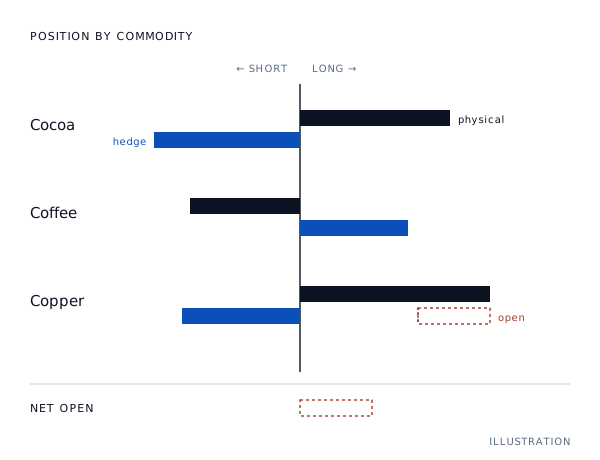
Trade physical cargoes and paper instruments such as futures, options and FX in the same book, with a clear view of both.
Hedging & Exposure
Link hedges to physical positions and see net exposure by commodity, period and counterparty as deals are booked.
Position & Mark-to-Market
Real-time positions and mark-to-market valuation, so the desk and risk both see profit and exposure as the market moves.
Trade Lifecycle
Track each contract from deal capture through pricing, shipment, delivery and settlement, with status visible at a glance.
A trade that flows straight through your business
Capture the deal once
Book a purchase or sale with all its commercial terms in seconds. Counterparty, pricing basis and shipment detail are recorded in one place, ready for the rest of the trade.
Price and hedge with confidence
Apply formula or to-be-priced terms, fix against futures and link hedges. Exposure and mark-to-market recalculate automatically across the book.
Move from front to back office
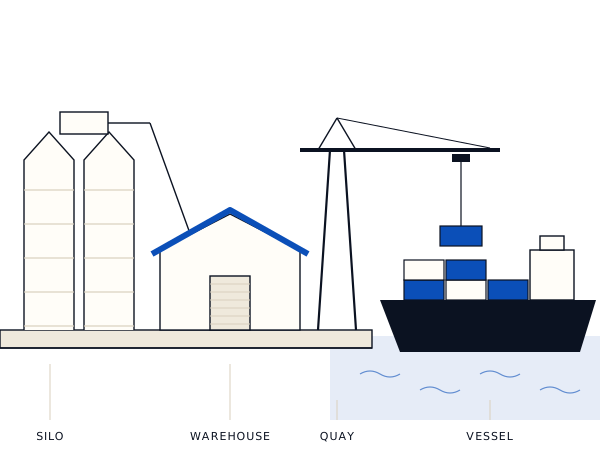
The contract drives inventory, shipment and logistics in Supply Chain, with no rekeying between the desk and operations.
Settle and account automatically
Invoices, costs and settlements feed straight into Financial Management, closing the loop from trade to ledger.
Built by traders, deployed the modular way
opsPhlo was built by senior developers and executives who spent years inside the largest global trading houses, so the Trading module reflects how a desk actually works, not how a generic ERP thinks it should.
- Start with a quick go-live for trading, then add inventory, finance and risk over time.
- Retire risky spreadsheets and reduce reliance on a sprawl of disconnected apps.
- Cloud delivery with a total cost of ownership lower than traditional on-premise systems.
- One real-time platform across trading, logistics, inventory and finance.
A modern trading book, not a monolith
Live with physical commodity traders in cocoa, agriculture and metals.
Built on Acumatica, so the books are a real general ledger.
Phlo Systems is ISO/IEC 27001:2022 certified.
Trading works best with the full picture
Risk Management
Take exposure further with mark-to-market, value-at-risk, position limits and risk reporting across your trading book.
Explore Risk ManagementSupply Chain
Turn a booked trade into action with shipment tracking, logistics and full visibility from origin to destination.
Explore Supply ChainFinancial Management
Feed trade costs, invoices and settlements straight into the ledger for a real-time view of trade profitability.
Explore Financial ManagementTrading, answered
Can opsPhlo Trading handle both physical and paper trades?
Yes. You can capture physical cargoes alongside paper instruments such as futures, options and FX in the same book, with hedges linked to physical positions and a clear view of net exposure.
What pricing types does the module support?
Trading supports fixed price, formula and to-be-priced contracts, with premiums, discounts, differentials and FX, priced off the relevant futures reference so contracts can be fixed as the market allows.
Do I have to implement the whole platform to use Trading?
No. opsPhlo is modular. Many clients start with a quick go-live focused on trading, then add inventory, supply chain, risk and finance over time as priorities evolve.
How does a trade reach operations and finance?
Because Trading sits inside the same platform, a booked contract flows straight through to Supply Chain for shipment and logistics, and into Financial Management for invoicing and settlement, with no rekeying.
See opsPhlo Trading in action
Bring deal capture, pricing, hedging and mark-to-market into one modular system, one step at a time.